If You Lead a Team, AI Adoption Starts with You
A recent NBER study surveyed nearly 6,000 CEOs, CFOs, and top executives across the US, UK, Germany, and Australia. The finding: roughly 90% said AI has had no measurable impact on productivity at their business. Not "small impact." No impact.
Meanwhile, those same executives report using AI personally for about 1.5 hours per week. They know it exists. They've tried it. But they haven't found the workflow that makes it stick.
If this sounds familiar, you're not alone. But here's the uncomfortable part: the research increasingly shows that AI adoption in organizations is a leadership problem, not a technology problem. And solving it requires a deliberate decision from the top.

Your team is waiting for your signal
Here's what might surprise you. McKinsey found that employees are 3x more likely than their leaders expect to already be using AI for 30% or more of their daily work. Your people aren't resisting AI. Many are already using it. They're just hiding it.
A Fortune/WalkMe survey put numbers to this: 48.8% of employees hide their AI use at work to avoid judgment. Researchers call it "AI shame." And it goes all the way to the top; 53.4% of C-suite leaders conceal their AI habits too. The people who should be championing AI adoption are using it behind closed doors.
Only 21% of US workers say they actively use AI on the job, according to Pew Research. But that number doesn't reflect capability or willingness. It reflects permission. Your team is watching to see whether AI use is something leadership endorses or merely tolerates.
BCG research found that when leaders show strong, visible AI support, employee positivity about AI rises from 15% to 55%. That's not a technology upgrade. That's a culture shift driven by a single variable: leadership behavior.
Training programs aren't the answer
The default corporate response to AI has been rolling out training. Workshops, lunch-and-learns, mandatory courses. The data says it's not moving the needle.
Only 25% of workers receive any formal AI training at all. Deloitte found that workforce AI access expanded 50% in one year, jumping from under 40% to roughly 60% of workers with sanctioned tools. But fewer than 60% of those with access actually use AI daily. The bottleneck isn't access or knowledge. It's confidence.
EY estimates that companies are missing up to 40% of potential AI productivity gains specifically because they haven't given people enough hands-on experience. Not more training decks. Not more strategy memos. Actual experience doing real work with AI tools.
An executive doesn't need to understand how large language models work. They need to experience a moment where AI saves them two hours on something that matters. That single experience does more for adoption than any training program.
Start with the work you already do
The best entry point for executive AI adoption is work that's universal, time-consuming, and visible: document and presentation creation.
Every leader creates presentations. Board decks. Quarterly reports. Investor updates. Team briefings. Client proposals. It's a task that consumes significant time, has high visibility, and benefits enormously from professional design. It's also low-risk to experiment with; a presentation that doesn't work out costs you nothing except time.
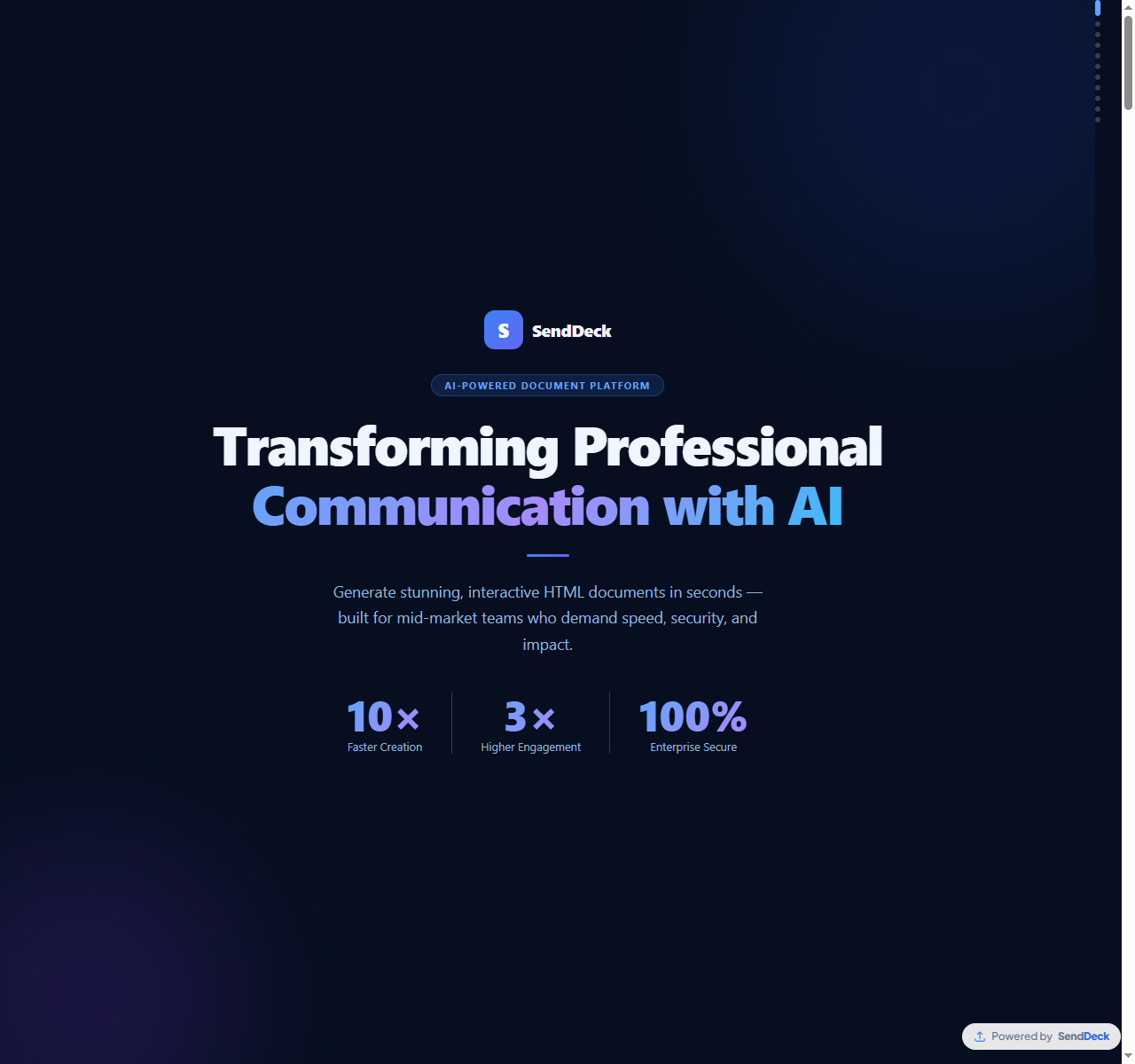
AI-generated presentations look like a design team spent hours on them. They take minutes.
The AI presentation market hit $2 billion in 2025 and is projected to reach $10 billion by 2033. That growth is being driven by the mainstream now, not early adopters. Workers who use AI tools regularly report saving an average of 2 hours per day. For a senior leader, that's not a convenience. That's a strategic reallocation of your most constrained resource.
Make it visible
The BCG data points to something specific. It's not enough to approve AI use in an email. The shift happens when leaders use AI visibly in their own work.
Walk into your next quarterly review with a presentation that's obviously polished, interactive, and responsive on every device. When someone asks how you built it, tell them. Share the tool. Show them how simple it was. That single act of visible use does more for organizational adoption than months of top-down strategy.
This is what Harvard Business Review described as the "last mile" of AI transformation: the gap between technical capability and organizational reality. The technology works. Closing the gap requires leaders who demonstrate that personally, not delegates who explain it theoretically.
The shift from AI skeptic to AI advocate almost always starts with a single experience where the output exceeds expectations. One visible result from a respected leader does more than a hundred training sessions.
The cascading effect of leadership adoption
When a VP shares an AI-generated document that looks like it took a design team a week to produce, and mentions it took 15 minutes, the conversation changes. Direct reports start experimenting. Middle management picks it up. Suddenly the organization is moving from the 90% of companies where AI has "no impact" to the group that's actually capturing productivity gains.
This isn't about mandating AI use. Mandates create compliance, not adoption. It's about creating an environment where people see AI working in the hands of leaders they respect, and feel encouraged to try it themselves.
The gap between AI's promise and AI's actual impact in most organizations comes down to this: people need to feel it work, not read about it working. And the fastest path from organizational skepticism to genuine adoption is a leader who shows up with an undeniable result and says "this took me ten minutes."
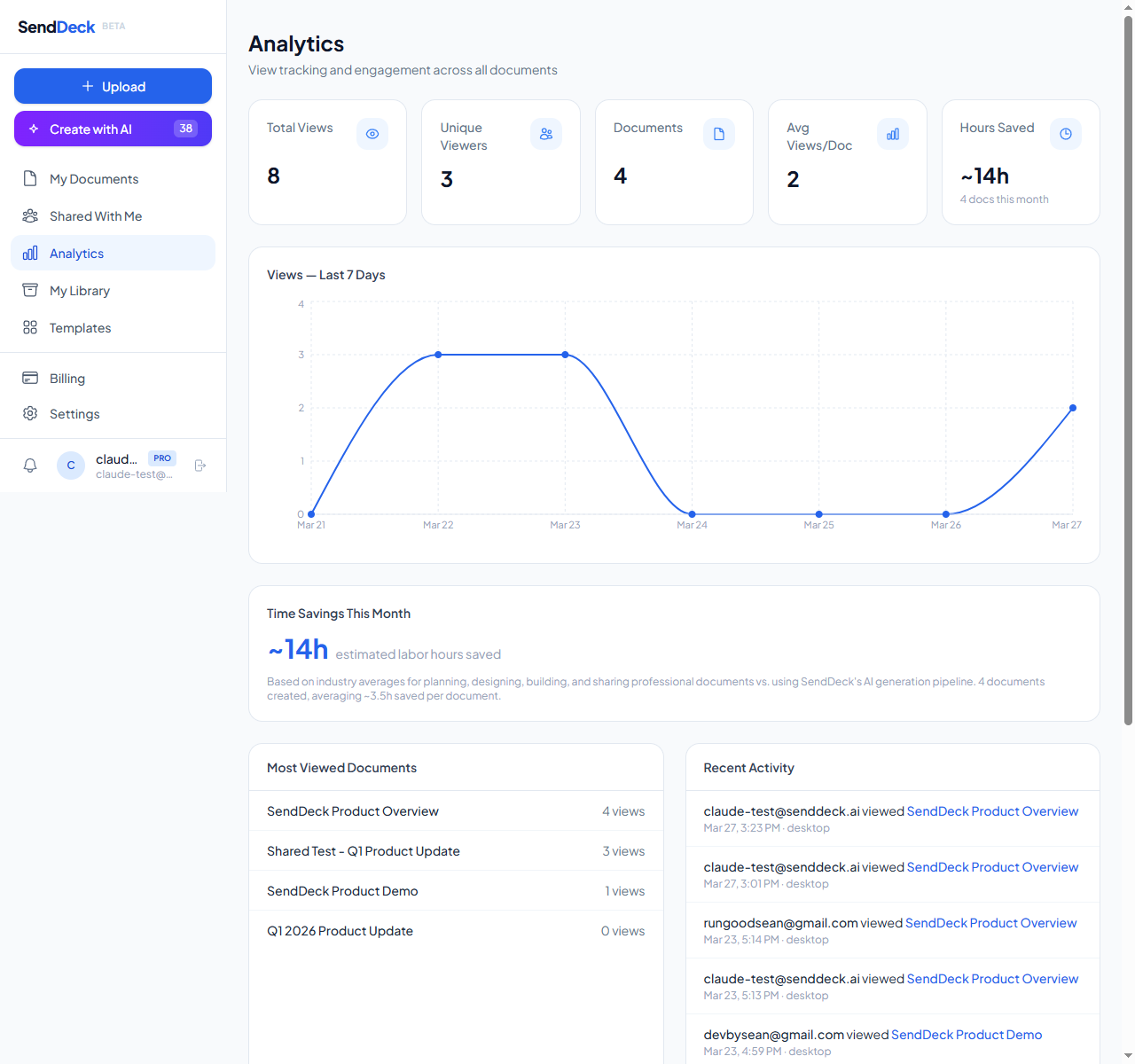
Knowing who viewed your presentation and when turns a deliverable into an intelligence tool.
The decision is yours
AI adoption at your organization won't happen by accident. It won't happen because you bought licenses. It won't happen because HR scheduled a workshop. It will happen when the people your team looks up to start using AI in ways that are visible, impressive, and replicable.
That's a leadership decision. And the best version of that decision isn't a memo or a strategy deck. It's a moment in a meeting where the work speaks for itself and someone asks, "How did you make that?"
Start with one presentation. Make it great. Share it. Let the results do the talking.
SendDeck lets you paste in notes and get a polished, interactive presentation in minutes. Share it with a branded link and track who views it. If you're ready for that first visible AI win, give it a try.
Create your first AI-generated presentation in minutes. Free to start, no credit card required.
Create Your First Presentation