Why I Built SendDeck: The Missing Link Between AI and Document Sharing
I generated a stunning interactive HTML report with Claude. Charts animated on scroll. Sections expanded on click. Key metrics pulsed with subtle color transitions. It looked incredible — the kind of document that makes people lean in.
Then I tried to share it.
Gmail stripped the JavaScript. The animations disappeared. The interactive charts became static screenshots of nothing. I tried attaching the file directly — some recipients couldn't open it, others got security warnings. I uploaded it to Google Drive and the sharing URL looked like a string of random characters that no client would ever click.
I could have deployed it as a website, but spinning up hosting for a single document felt absurd. That's a solution for engineers, not for the sales lead who needs to send a proposal by end of day.
HTML is actually the best document format ever created. It's responsive, interactive, universally supported, and infinitely expressive. We just forgot to build the infrastructure for sharing it.
The format nobody treats as a format
Think about it. We have entire ecosystems for PDFs — viewers, signers, annotation tools, analytics. We have them for slides — PowerPoint, Google Slides, Keynote, all with sharing and collaboration built in. But HTML, the format that powers literally every website you've ever visited, has nothing. No "upload and share" tool. No viewer analytics. No branded URLs.
This felt like a gap that shouldn't exist, especially now. AI tools are getting remarkably good at generating rich HTML documents — complete with responsive layouts, embedded visualizations, interactive elements. Claude, GPT, Gemini — they can all produce HTML that would have taken a front-end developer days to build. But once you have that beautiful file sitting on your desktop, the sharing story falls apart.
So I built the missing piece
SendDeck is the infrastructure layer for HTML as a document format. The core idea is dead simple: upload any HTML file, get a clean branded URL, share it with anyone.
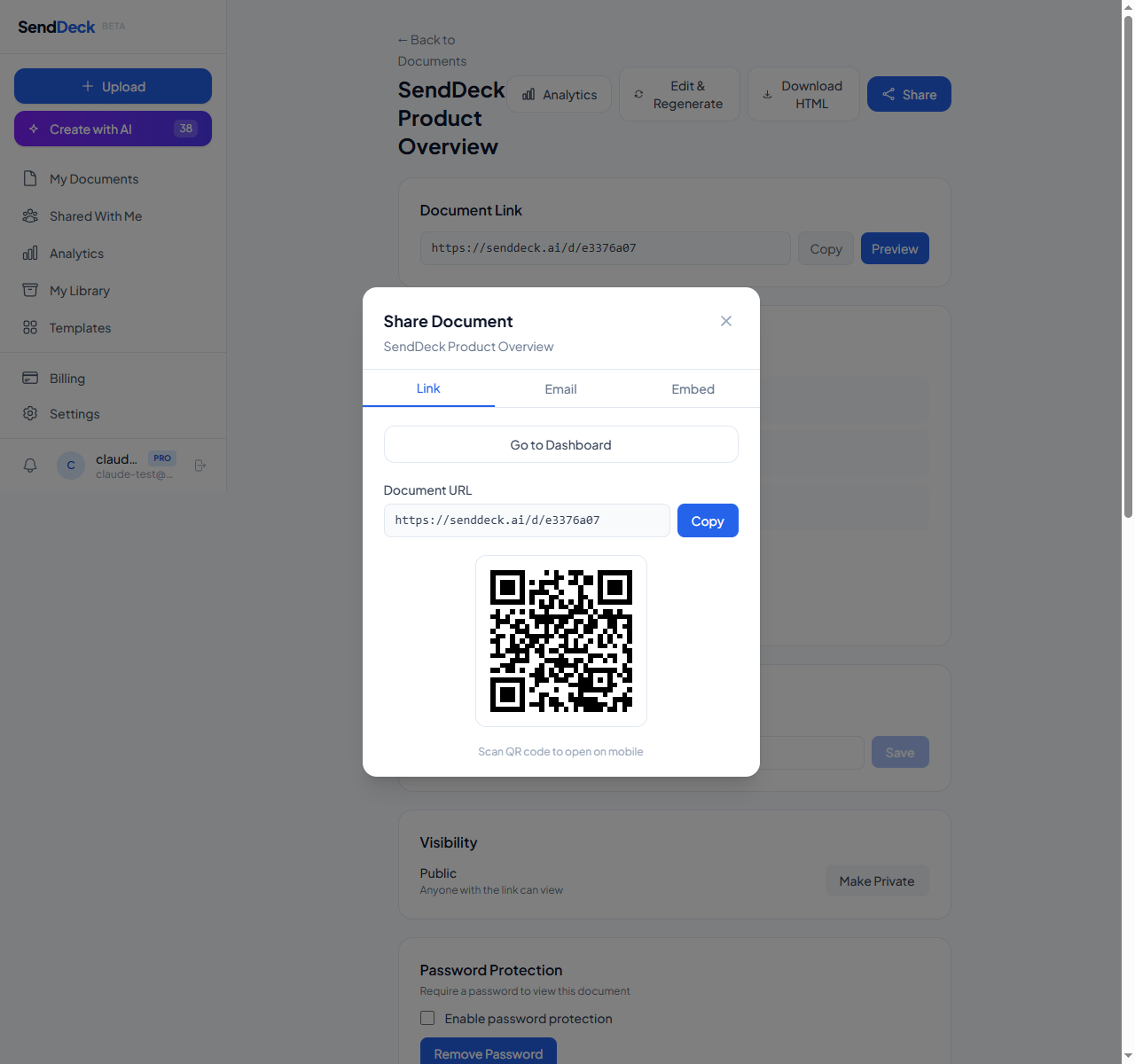
Share any document with a clean URL and QR code
But the details matter. Each document gets a short, memorable link on your own SendDeck URL — something like senddeck.ai/d/q3-results, not a hash that looks like your cat walked across the keyboard. Recipients open it in their browser. No downloads, no plugins, no "do you have the right version of Acrobat" conversations.
And because every view goes through SendDeck, you get analytics that PDFs and email attachments can never provide. You can see exactly who opened your document, which sections they actually read, and how long they spent on each one. For anyone who's ever sent a proposal into the void and wondered if it was even opened — that visibility changes things.
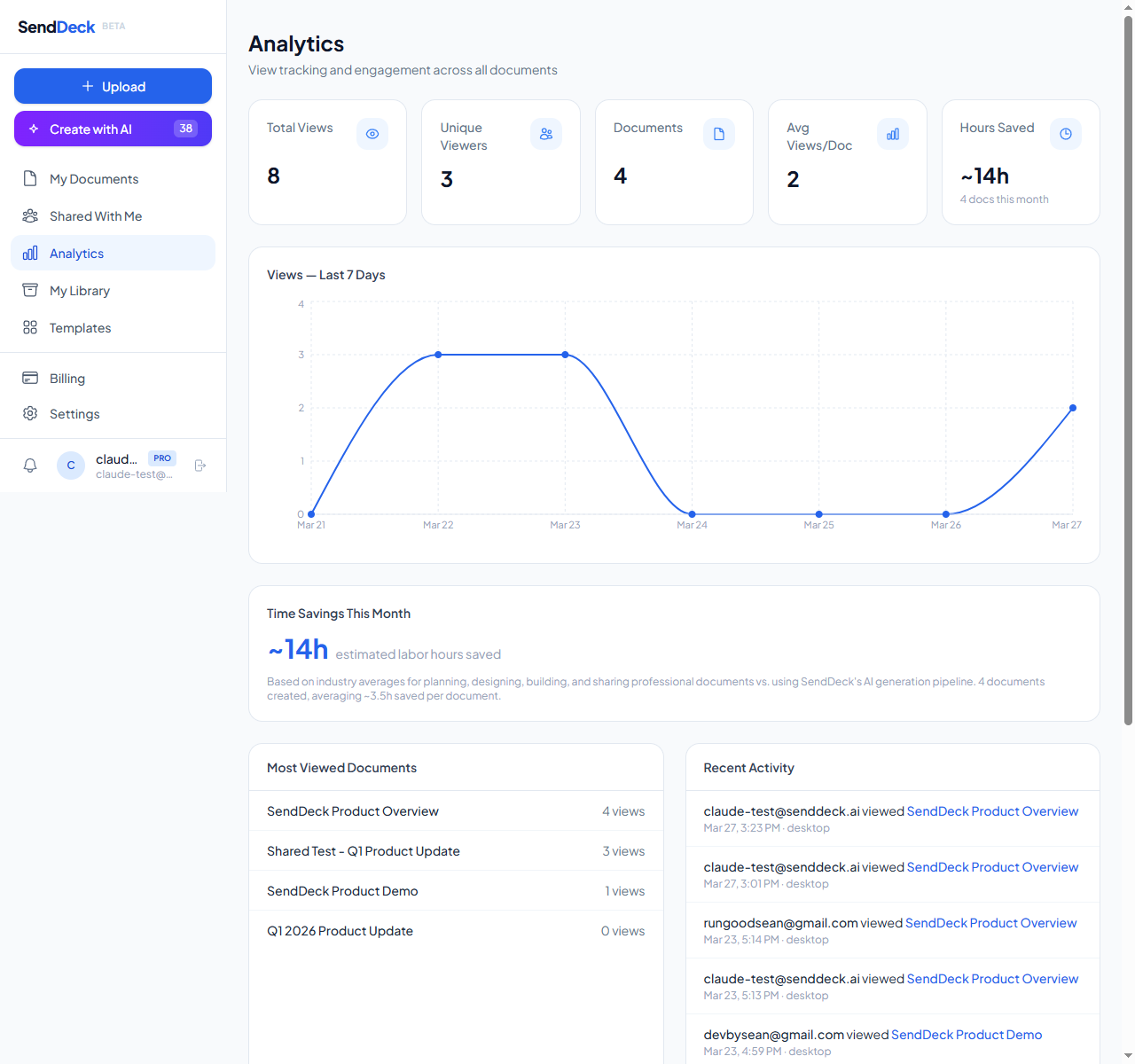
See exactly who read what — and for how long
AI generation built in
After talking to early users, I realized something: a lot of people don't have an HTML file to start with. They have source material — notes, data, a rough outline — and they want it turned into something polished and shareable. So we built an AI generation pipeline directly into SendDeck.
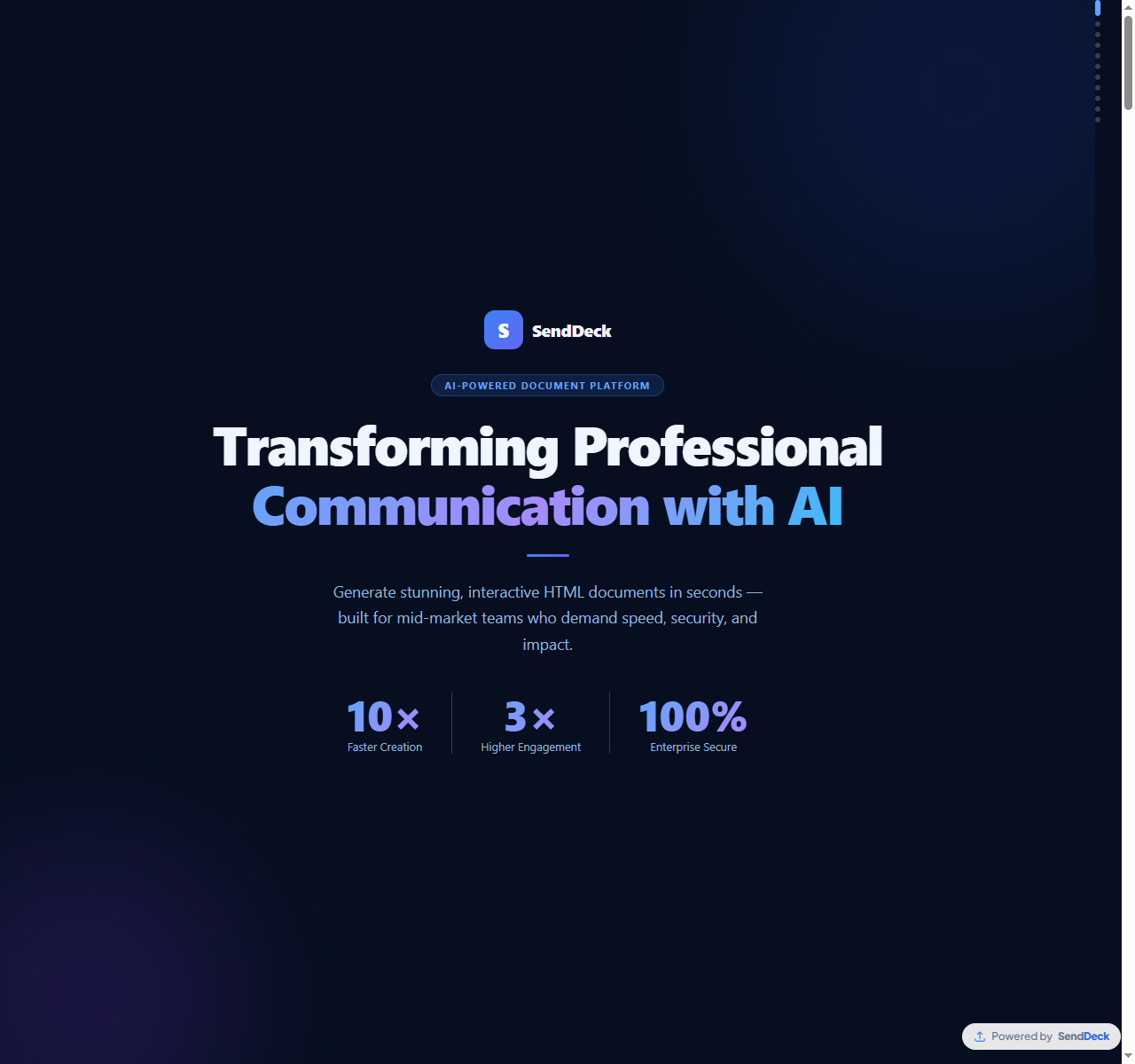
An AI-generated interactive presentation — built in minutes from source material
You paste in your source material, pick a style, and SendDeck generates a complete interactive HTML document. Not a template with your text dropped in — a custom document with a layout, visual hierarchy, and interactive elements tailored to your content. It takes just a few minutes. Then you publish it and share the link.
The generation pipeline uses a two-stage approach: a fast model to pre-process and structure your input, then a more capable model to generate the final HTML. It's optimized so the output actually looks like something you'd be proud to send, not something that obviously came out of a chatbot.
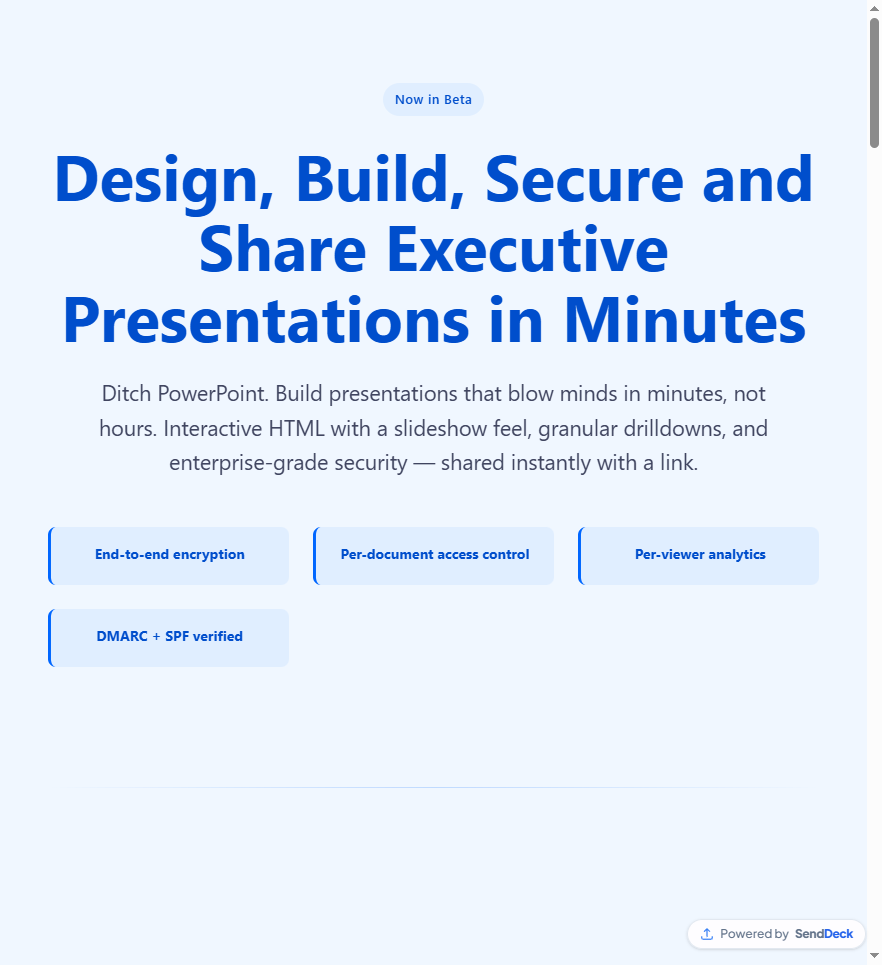
Recipients view documents in a clean, branded viewer — no downloads required
Security as a foundation, not an afterthought
One concern I heard early and often: "If people can upload arbitrary HTML, what about malicious scripts?" Fair question. Every uploaded document is rendered inside a sandboxed iframe with strict security boundaries. No allow-same-origin, no access to the parent page's cookies or authentication tokens, no ability to make requests that impersonate the viewer. Your documents run in their own isolated world.
This isn't security theater — it's the same sandboxing model that browsers use to isolate untrusted content. We just applied it rigorously to the document viewing layer. You can upload JavaScript-heavy interactive documents without worrying about compromising the platform or your viewers.
Where things stand
SendDeck is live and in beta. There's a free tier you can start with today — upload a few documents, try the AI generation, see the analytics. I'm building this in public and iterating fast based on what actual users tell me.
If you've ever been frustrated trying to share something richer than a PDF but simpler than a website, I'd genuinely love to hear from you. The best product decisions I've made so far have come from conversations with people who felt this exact pain.
Upload your first HTML document or generate one with AI — free to start, no credit card required.
Try SendDeck Free